

Through rigorous college programs in correctional settings, paired with reentry navigation and community-based support, SUNY Higher Education in Prison helps justice-impacted students build pathways to degree completion, career success, and lasting impact in their communities.
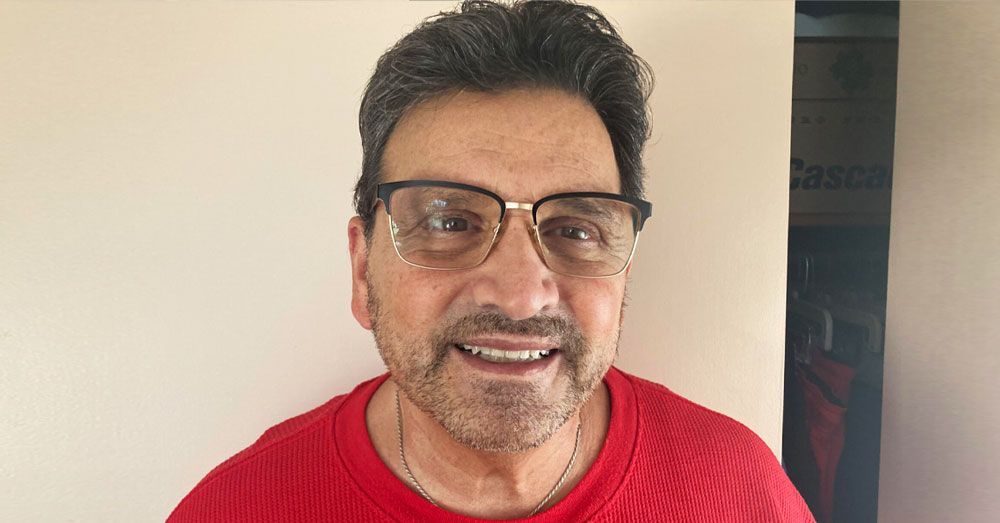
Charlie Grasso’s journey reflects that mission in action. Despite attending college while incarcerated, Charlie was unable to complete his degree due to limited coordination and transferability between institutions. After continuing his education at SUNY Empire State University, Charlie earned his Bachelor of Arts in Community and Human Services in December 2025, turning a long-held goal into reality. Today, he continues to give back as an OHEP Teaching Forward Fellow at New Choices, where he supports others in the community while representing the power of higher education, opportunity, and fair chances.
Read his story in his own words below:
Like many incarcerated New Yorkers in the early 1990’s, I started my college education during my incarceration. Back then there were many college programs that were funded by Pell and this was how I had the opportunity to attend Marist College at Green Haven Correctional Facility. For me and my peers, higher education was a pathway to rehabilitation and personal growth. Then came the 1994 Crime Bill which made incarcerated people ineligible to receive Pell grant funding and for those of us were in college, everything came to a halt. I was now stuck with 48 credits until either the state funded higher education in prison, or some donor funded volunteer initiative entered the prisons. So, when programs like Hudson Link and SUNY Higher Education in Prison came back, there was a glimmer of hope, especially for those of us who had prior college credits. However, college wasn’t in every prison and the hope was that you would be successful in applying for an educational transfer and you could be moved to a facility that had a college program.
However, I quickly learned that it wasn’t enough to be in a facility with college. All college programs were different. And some college programs that came back wouldn’t take my prior credits. I ended up in a prison where I was advised by the college to start over and give up any prior college credits before attending. That experience created an internal struggle for me. The sacrifice of forgoing my prior success was demoralizing. And yet I felt I had no other choice. In the confines of prison, something is most always better than nothing.
It haunted me that within a decade of my incarceration I could have gained my bachelor’s degree, and then some. And yet upon my release I only had 99 credits. Being formerly incarcerated and 70 years old with only 99 college credits, my options were limited. However, like always, I continue to make strides despite adversity. I currently work in the human services field with unhoused individuals and have even facilitated community theater workshops for this population. In my spare time I am active in advocacy campaigns for various social justice causes, mainly those pertaining to the rights of people in prison.
I understand that now that Pell grants are back, “oversight entities” are asked to prioritize programs that transfer and articulate with one another. I cannot stress how importance this is. College policies that prevent us from continuing our education are asking us to make a significant emotional and social sacrifice. Prisoners face challenges when striving to do the right thing in an environment that may not always provide adequate support or recognitions for such efforts. Our credits earned are not just proof of our academic success, but a demonstration of how we have navigated the complexities of prison life and the socioemotional growth with achieved. For those of us who were sentenced to an A-1 felony of twenty-five-years to life, or more, who are excluded from a Conditional Release date, work release, or any kind of earned incentive that those serving a B felony or less, having to choose to start at zero credits only furthers the idea that no matter what we do, we cannot get ahead. My hope is that can change with Pell. And I hope now, everyone I left behind the wall can come out with a degree or a way to finish that degree.
**As of December 2025, Charlie has graduated with his Bachelor of Arts in Community & Human Services from SUNY Empire State University.**

Your story is truly inspiring and powerful. Despite all the challenges and setbacks you faced, you never gave up on education, growth, and helping others. Your perseverance and dedication to social justice show incredible strength and resilience. Congratulations on earning your Bachelor of Arts degree — this is a remarkable achievement and a testament to your determination. Thank you for sharing such an important perspective about education, hope, and second chances.