
Written by: Matthew J. Sheiffer
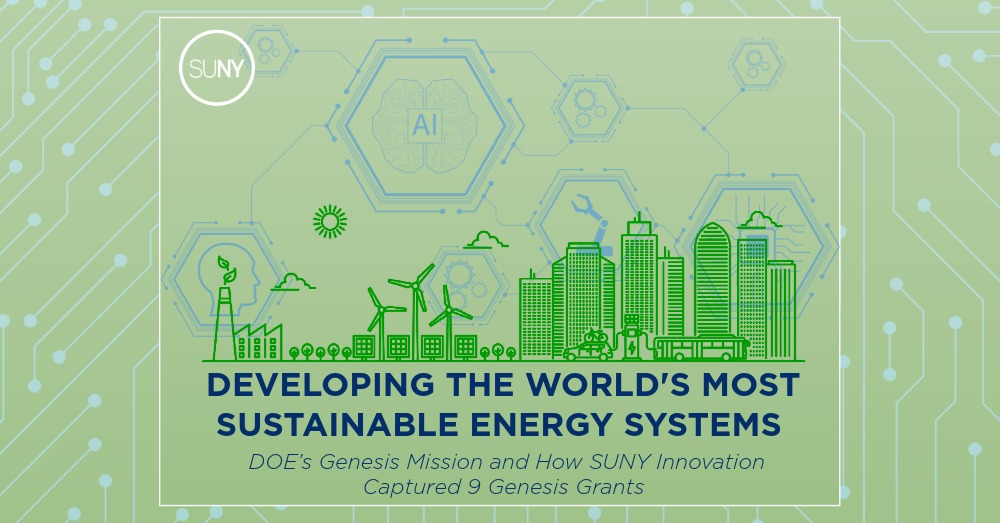
The U.S. Department of Energy’s GENESIS Program is a major research initiative designed to accelerate breakthrough energy technologies and strengthen the nation’s clean energy future. The program brings together universities, national laboratories, industry partners, and government agencies to tackle complex energy challenges, advance scientific discovery, and move promising technologies from the laboratory into real-world applications.
How It Will Make a Difference
GENESIS aims to help the United States develop more reliable, affordable, and sustainable energy systems. Its research supports efforts to reduce greenhouse gas emissions, improve energy security, modernize critical infrastructure, and strengthen U.S. competitiveness in emerging technology sectors. The innovations generated through the program have the potential to benefit communities worldwide by contributing to cleaner energy production, greater resilience against climate-related challenges, and new economic opportunities.
The Role of SUNY Researchers
Researchers across SUNY campuses are contributing expertise in areas such as energy systems, advanced materials, artificial intelligence, data science, environmental science, and engineering. By conducting fundamental and applied research, SUNY scientists help develop and test new technologies, train the next generation of researchers, and collaborate with national and international partners to accelerate innovation. Their work helps translate scientific discoveries into practical solutions with societal and economic impact.
Across SUNY’s four R1 research universities—the State University of New York at Albany, at Binghamton, at Buffalo, and at Stony Brook—and SUNY Polytechnic Institute, the effort produced 174 proposals addressing 16 national priority areas, including artificial intelligence, quantum systems, and next-generation energy technologies. With only 45 days to mobilize, The Research Foundation for SUNY offices of sponsored programs at all five campuses worked together to craft the proposals on a very short deadline. The effort was a success – with SUNY receiving the second-highest number of awards.
Stony Brook University Received Three Project Awards, Plus Three Additional Subawards*, including:
*Subawards are projects led by other institutions
Jan C. Bernauer
Foundation Models for Transferable Particle Tracking in Nuclear Physics, in collaboration with Brookhaven National Laboratory and Argonne National Laboratory.
The project will develop AI foundation models that learn directly from raw particle detector data collected across multiple nuclear physics experiments. By training the models on different detector technologies, the research team aims to create more adaptable tools that can improve particle tracking across experiments while reducing the need to build a separate data-analysis system for each one.
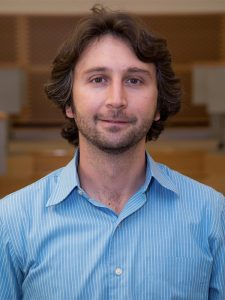 Emre Salman
AI-Driven Autonomous and Self-Healing Readout Electronics for Radiation-Tolerant HEP Detectors, in collaboration with Brookhaven National Laboratory and Indiana University
The project will develop an AI-enabled framework to make microelectronics more resilient in harsh, radiation-intensive environments, with an initial focus on detector readout chips used in high-energy physics and scientific instruments. The team will demonstrate a rapid workflow that uses AI to monitor these chips, identify radiation-induced disruptions and apply carefully controlled corrections to help maintain reliable performance.
Shikui Chen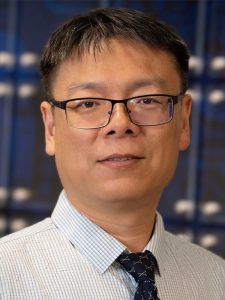
Geometry-Informed AI for Accelerated Multiphysics Co-Design of Wide-Bandgap Power Modules, in collaboration with Sandia National Laboratories and GE Vernova.
The project will create an AI platform to accelerate the design and testing of advanced wide-bandgap power modules used in high-efficiency energy systems. By rapidly evaluating designs, learning across different component configurations and incorporating factors such as manufacturability, reliability and uncertainty, the platform will help researchers move from a slow, step-by-step process to a more integrated and efficient approach to engineering design.
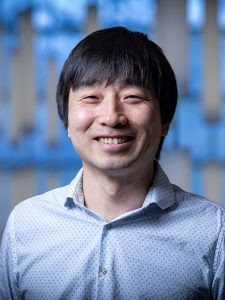 Nengkun Yu*
Neuro-Symbolic Synthesis of Verified Computational Physics Code for Scientific Discovery, led by Johns Hopkins University.
The project will develop an AI-assisted approach to help scientists create and adapt complex software for high-performance and quantum computing systems more efficiently. By combining AI code generation with symbolic reasoning that can verify mathematical and physical requirements, the team aims to produce.
Anatoly Frenkel*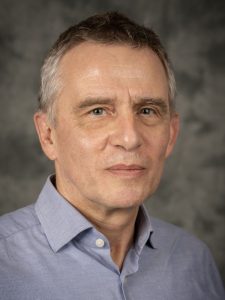
Transient Kinetics and Spectroscopy for Agentic Digital Twins to Upgrade Domestic Alkane Feedstocks into Value-Added Chemicals, in collaboration with The Pennsylvania State University, Georgia Institute of Technology, and ExxonMobil Corporation.
The project will develop an AI-enabled “digital twin” framework to accelerate the discovery and optimization of catalysts that convert domestically available alkane feedstocks, such as propane, into higher-value chemicals. By combining rapid transient reactor measurements with infrared, Raman, and X-ray absorption spectroscopy, the team will train AI agents to predict catalyst performance, identify active structures and reaction mechanisms, and guide subsequent experiments. The Frenkel group will contribute advanced operando X-ray spectroscopy and machine-learning-assisted analysis to track how catalysts restructure under working conditions. The team aims to demonstrate catalyst evaluation up to 20 times faster than conventional methods while maintaining accurate predictions of activity and product selectivity.
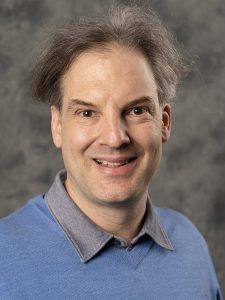 Daniel Knopf*
An Automated, Multimodal-AI-Enabled Cloud Chamber for Constraining Cloud Microphysical Processes in Earth System Models, in collaboration with Brookhaven National Laboratory.
By controlling an advanced cloud chamber with an AI framework, scientists will create specific cloud conditions on demand, easily maintain those conditions, and collect more reliable data.
The University at Buffalo Received Two Awards, Plus and Additional Subaward, Including:
Jiayu Peng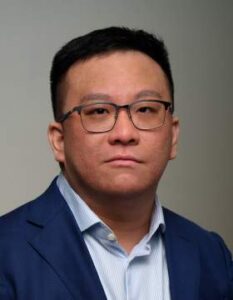
AI-powered chemical manufacturing research.
The first UB-led project focuses on creating an AI-powered tool to accelerate catalyst and process development for the electrosynthesis of carbon-based fuels and chemicals. CLEAR-AI will coordinate these activities within one continuous decision-making loop. The platform will integrate physics-based modeling, automated experimentation, advanced materials characterization, electrochemical testing and data-driven analysis so that results from each round of computation and experimentation can guide the next most informative calculations and experiments.
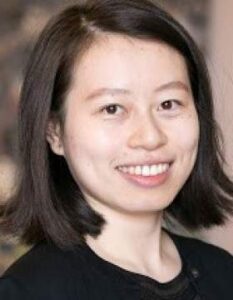 Yinyin Ye
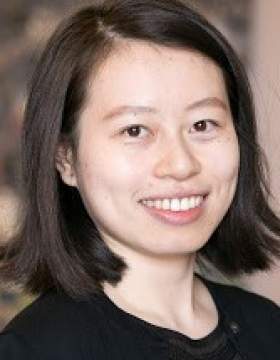
Phage-based programming of anaerobic microbiome.
The second UB-led award focuses on employing AI to control anaerobic microbiomes for producing medium-chain carboxylic acids (MCCAs), which are used to make aviation fuels, animal feed additives and other industrial products. Ultimately, the project explores how AI could make it faster, less expensive, and more precise to find effective phages than current trial-and-error methods, Ye says, and the tool may be useful for engineering other microbial systems to produce high-value products that support the U.S. bioeconomy.
Vasili Perebeinos*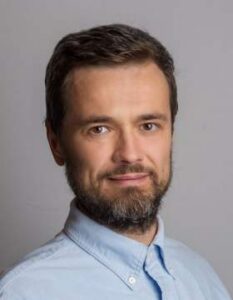
Modeling electron behavior at quantum scale.
The third project is a subaward to Vasili Perebeinos, professor of electrical engineering, for a project, led by Stanford University, using AI to model the behavior of electrons at quantum scale. With the project – AI-Driven Transport Optimization of Metallic and Interfacial Quantum Materials (ATOMIQ) – scientists aim to better understand the processes leading to this decreased conductivity. They also plan to identify new materials to mitigate these effects. They will use AI, combined with fundamental physics, to model electron transport and conduct experimental studies of materials only a few atoms in width.
Brookhaven National Laboratory (BNL)** Received Seven Awards and is Contributing to 29 Additional Projects Led by Other Institutions
**Brookhaven Science Associates (BSA) manages and operates BNL on behalf of the U.S. Department of Energy’s Office of Science. BSA is a partnership between Battelle and The Research Foundation for SUNY on behalf of Stony Brook University.
Kevin Brown
AI-Driven, Self-Learning Digital Twins for Robust Operation of Particle Accelerators.
Researchers will build AI-enabled, virtual representations of particle accelerators that can predict status conditions and learn from live data to make complex operations more reliable.
David Park
Cross-Domain Scientific Reasoning through Composable Foundation Models.
The Genesis Mission is producing new AI models at an accelerating pace, and this project will connect those models into one continuously improving reasoning system to accelerate discovery and collaboration across the Mission.
Arthur Sedlacek
An Automated, Multimodal-AI-Enabled Cloud Chamber for Constraining Cloud Microphysical Processes in Earth System Models.
By controlling an advanced cloud chamber with an AI framework, scientists will create specific cloud conditions on demand, easily maintain those conditions, and collect more reliable data.
Yihui Ren
MARS: scaling Multi-Agent Reinforcement learning for Scientific hypothesis generation.
This project will connect multiple AI agents, each trained on complex scientific tasks such as reading literature and analyzing data, to a network that will generate better research hypotheses than today’s AI models can.
Gabriella Carini
Deployable Cavity Coupled Cold Atom Quantum Sensing Platform Driven by Agentic AI.
Scientists will develop an AI-controlled quantum sensing platform to automatically tune and stabilize sensors for high energy physics experiments in real time.
Soumayajit Mandal
From Materials to Circuits: An AI-Native EDA Framework for Physics-Based Microelectronics Co-Design.
Researchers will use AI to speed up the design of custom computer chips for scientific instruments, such as particle detectors, quantum sensors, and fusion diagnostics.
Alexei Klimentov
Transforming Computing Cyber infrastructure for Collider Experiments to AI Based Computing and AI-ready Data.
To manage the ever-increasing volume of data produced by particle colliders, reduce operator workload, and speed up discoveries, researchers will build AI into the computing infrastructure at the Electron-Ion Collider and the Large Hadron Collider.
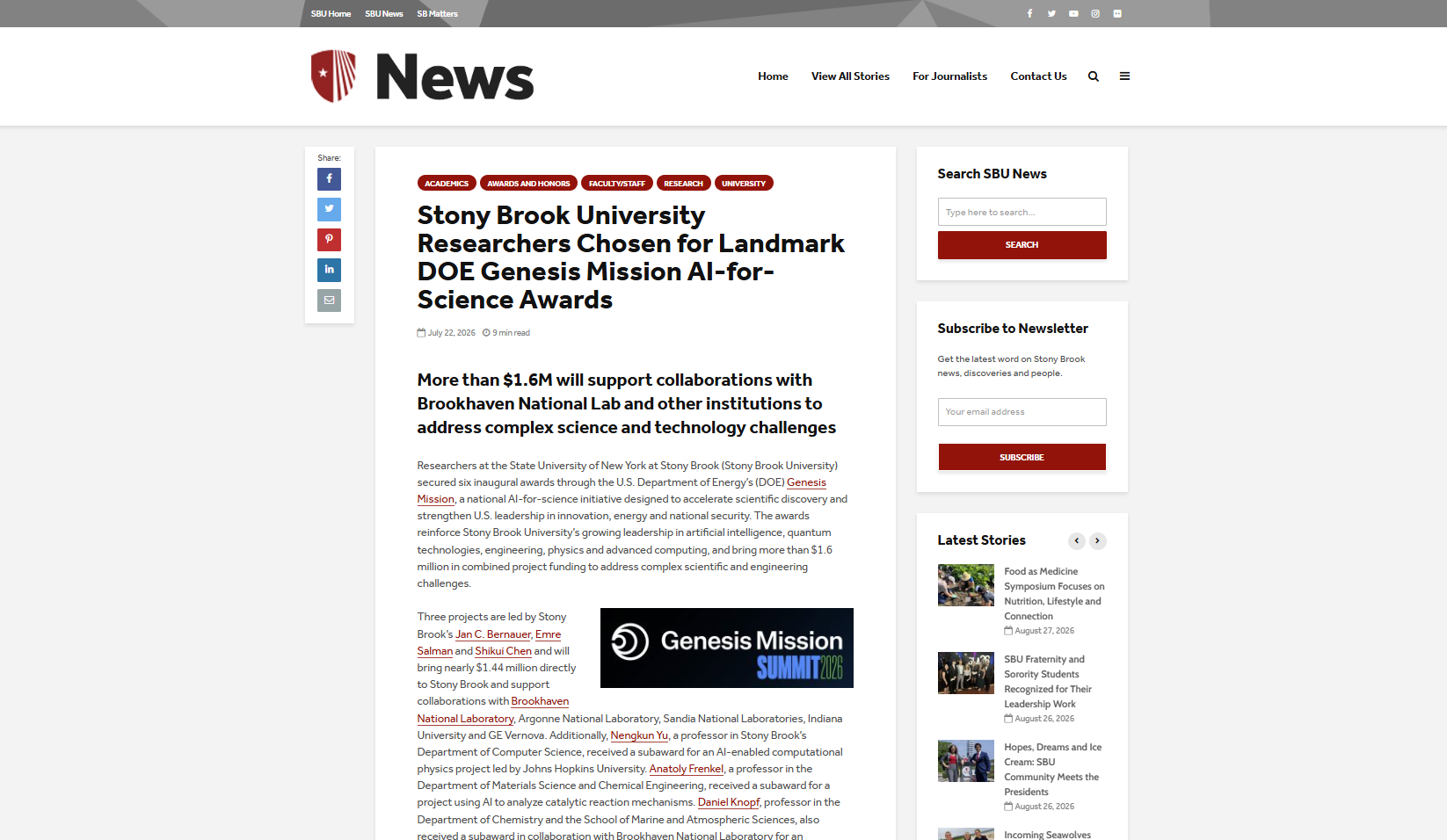
From more than 5,000 submissions, SUNY researchers were among the 278 selected proposals. A great feature below from Stony Brook University highlighted how the campus helped rapidly organize and support this system-wide push. While the grants secured by the University at Buffalo spotlight the promise of accelerating discoveries with artificial intelligence in materials discovery, microbiome engineering, and quantum technologies, Stony Brook researchers are advancing AI across advanced physics, microelectronics, and energy systems.
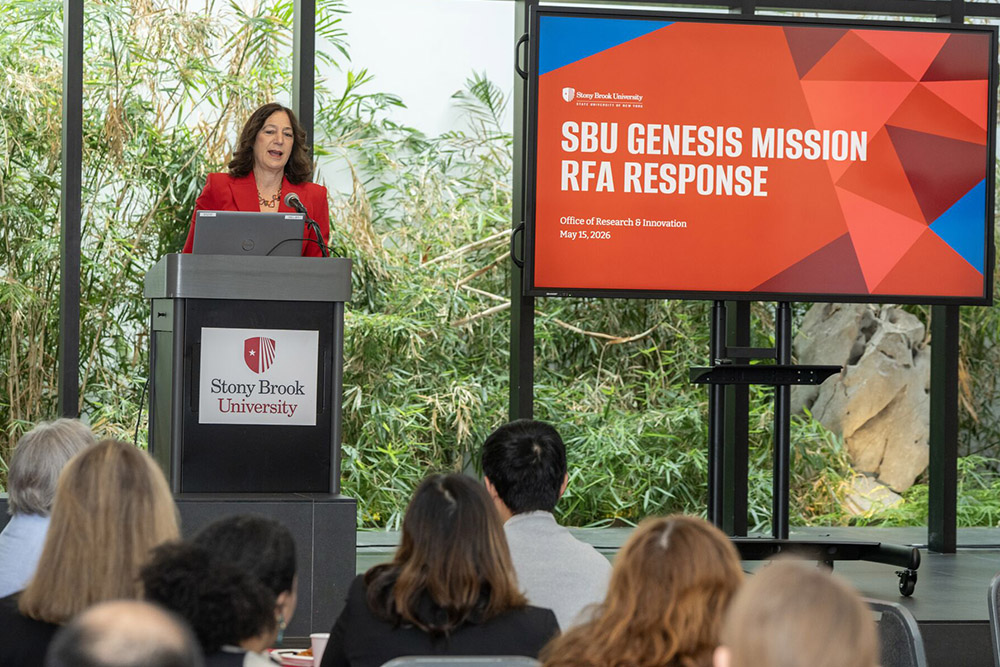
Click on the photos below for more information about the projects at the University at Buffalo and Stony Brook University selected for DOE Genesis.
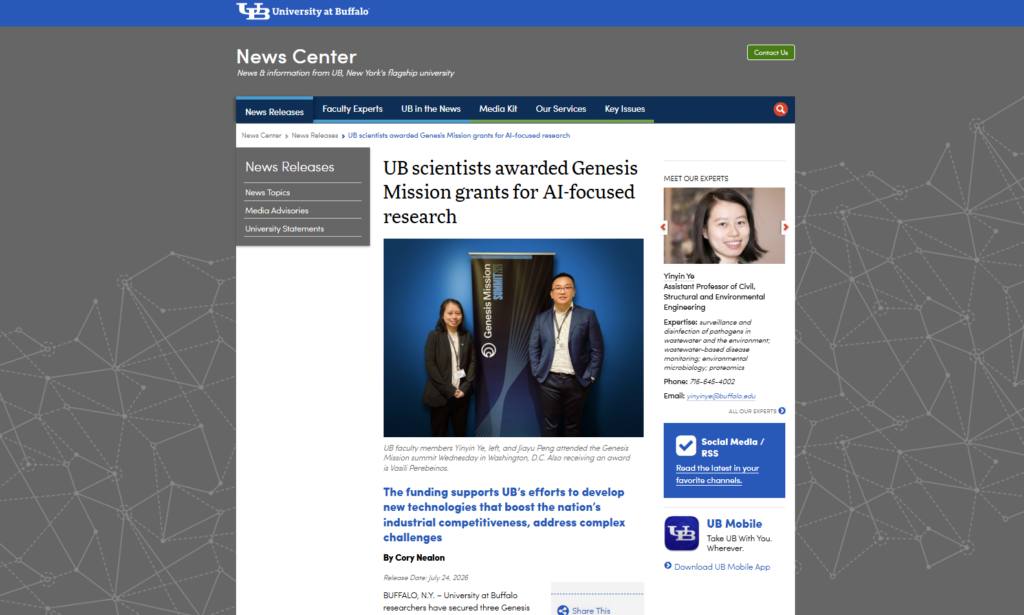
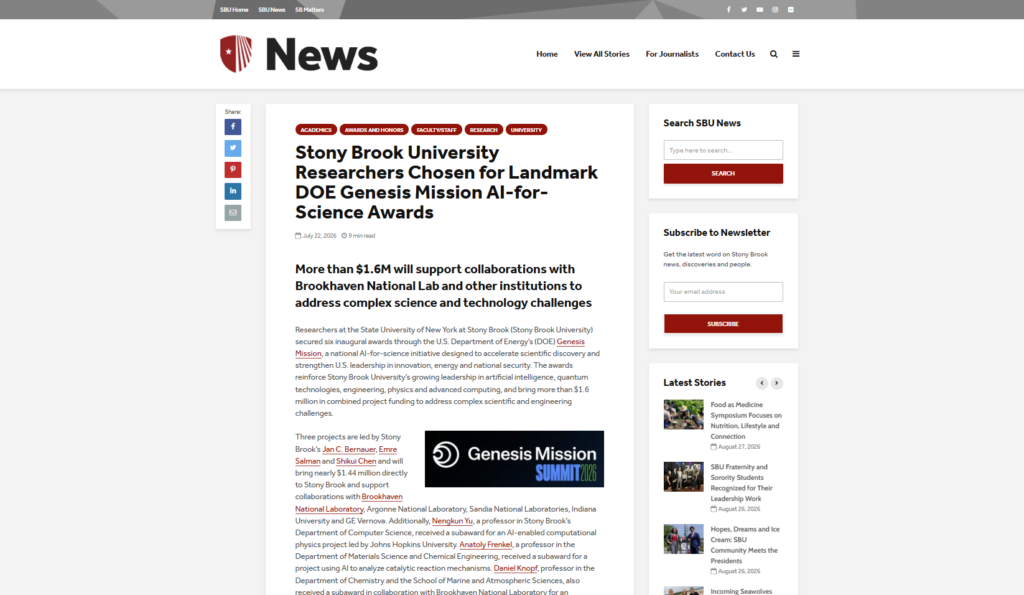
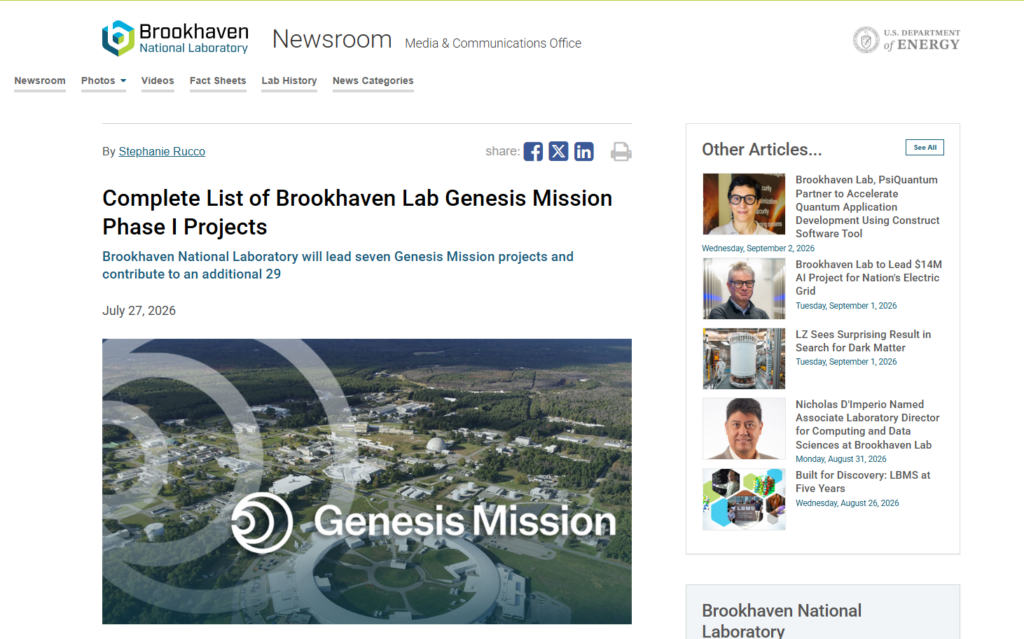
UPDATE: Announced on September 1, 2026, Hendrik Hamann, chief AI scientist for Innovation, Science, and Security at Brookhaven Lab and joint appointee at Stony Brook University will lead a $14M three-year effort at Brookhaven National Lab as part of the Genesis Mission Phase II to develop a next-generation grid foundation model.
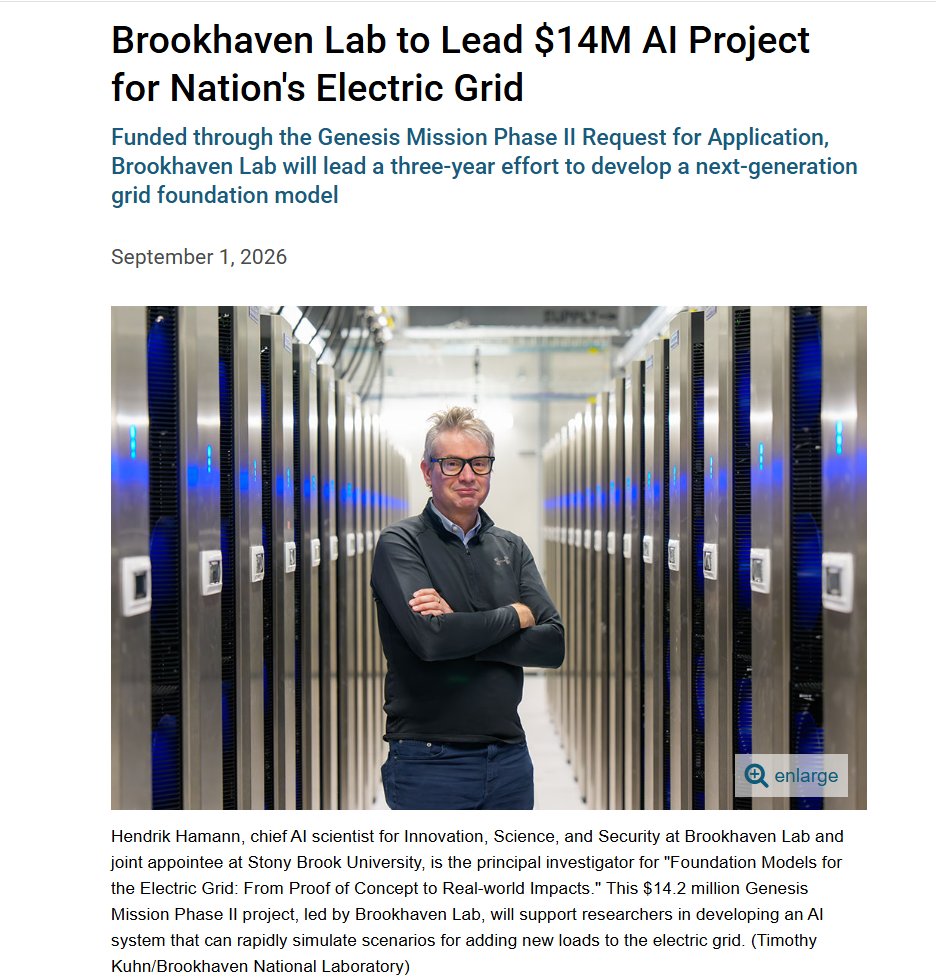
Huge congratulations to the incredible research teams at the State University of New York at Buffalo, at Stony Brook, and at Brookhaven National Laboratory!
This achievement represents outstanding work by the researchers, faculty, and collaborators, as well as the vital support of the behind-the-scenes teams. Special thanks to the campuses’ Offices of Research and Innovation for fostering the collaborative environment that makes successes of this magnitude possible.
Learn more:
- Want to learn more about SUNY researchers? Find them on SUNY Research Connect.
- Want to learn more about available technologies and startups? Search our database on SUNY TechConnect.
- Subscribe now to Research 360° at SUNY so you can stay up to date on all research milestones and accomplishments across SUNY.
- Visit SUNY Research in the News for daily digests about research and innovation across the research enterprise.